Shubh Muhurat and Panchang: How Auspicious Timing Is Chosen
An auspicious time is not picked from a single ‘good hour’. It is assembled from the day’s five Panchang limbs, the purpose of the event, local sky data and—when appropriate—the people involved.
The five limbs of Panchang
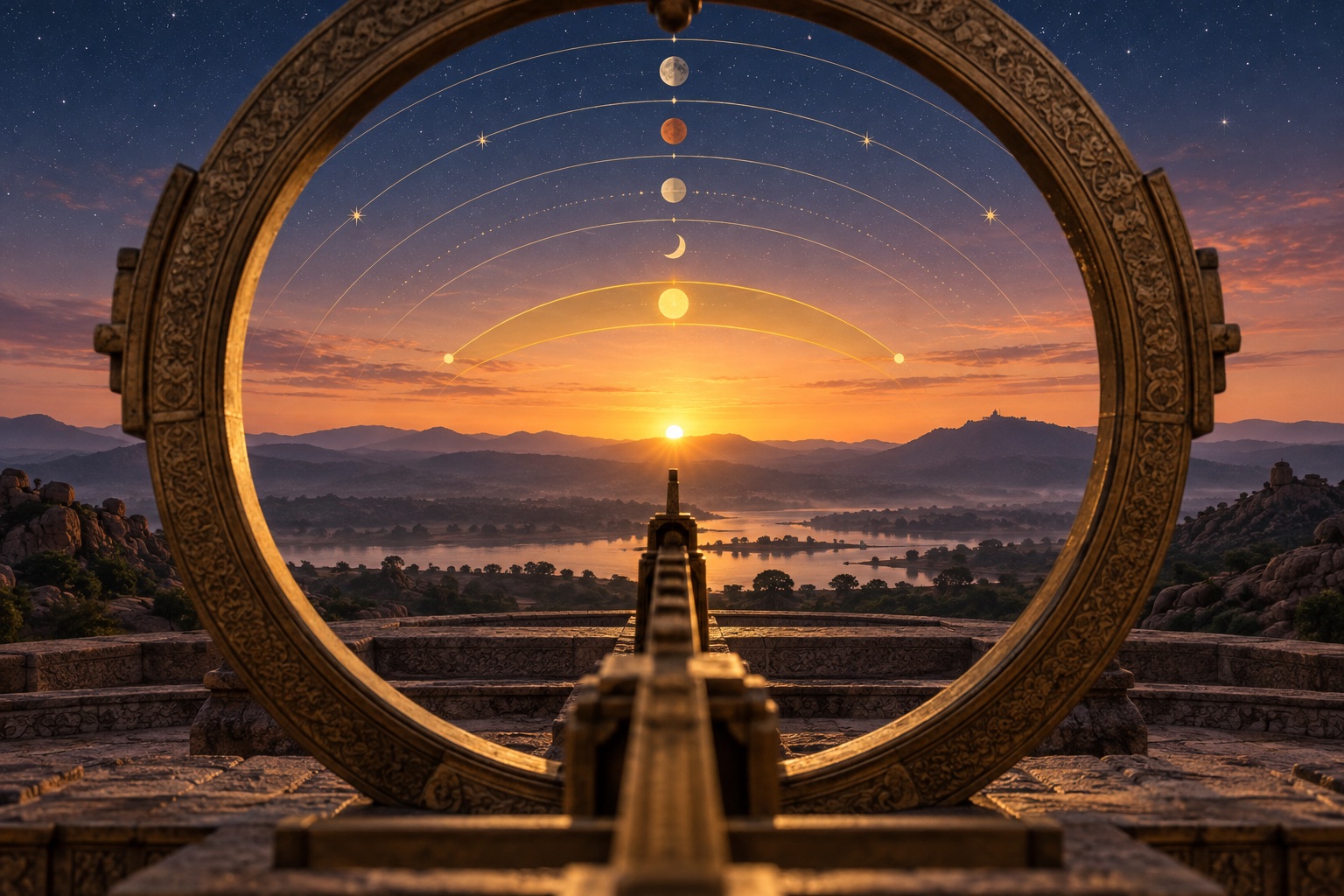
A Panchang is a traditional Hindu almanac based on solar and lunar relationships. Its five limbs describe the quality of a moment from different angles. Calculations depend on location, sunrise and the astronomical conventions of the almanac used.
Tithi is the lunar day, based on the angular distance between Sun and Moon. Vara is the weekday. Nakshatra is the lunar mansion occupied by the Moon. Yoga is calculated from the combined longitudes of Sun and Moon. Karana is half a Tithi. None of these is interpreted alone.
- Tithi: phase relationship of Sun and Moon
- Vara: weekday and its planetary ruler
- Nakshatra: the Moon’s stellar sector
- Yoga: a Sun–Moon angular combination
- Karana: half of a lunar day
Muhurat begins with purpose
Different activities favour different qualities. A wedding muhurat is not selected by the same priorities as signing a contract, beginning a journey, entering a house or starting study. The astrologer first removes unsuitable intervals, then looks for supportive combinations for the event.
Common filters may include Rahu Kalam, Yamaganda, Gulika, eclipses, unsuitable Tithis or Nakshatras, and periods such as Bhadra, depending on region and lineage. Supportive weekday, lunar day, Nakshatra and Ascendant factors are then considered. Practices vary, so two competent calendars may not produce identical windows.
Keep in mindAlways enter the event location. A window copied for Delhi may not be correct for Bengaluru, London or New York because local sunrise and ascensional factors differ.
The role of the Moon and Lagna
The Moon is central because it changes quickly and is associated with the mind and public flow of an undertaking. Practitioners may avoid a weak or afflicted Moon and prefer a supportive relationship to the participants’ natal Moon signs.
For more important ceremonies, a Muhurat Lagna may be chosen. Its Ascendant, lord, relevant house and benefic or difficult influences are examined for the event’s purpose. The aim is not a flawless chart—such a moment may not exist—but a stable chart with the most relevant strengths and manageable weaknesses.
- Wedding: partnership factors and durability
- Business launch: Ascendant, tenth and eleventh-house support
- House entry: fourth-house and domestic stability factors
- Travel: movement, safety and a suitable lunar condition
Why apps and calendars disagree
Differences can come from location, time zone, daylight-saving handling, sunrise definition, ayanamsha, calculation settings and regional rules. A calendar may label an entire date auspicious while a personalised method selects only a short interval.
When comparing results, check the city, date format and time zone first. Then check whether the source is giving a general festival calendar, a Choghadiya window or a purpose-specific Muhurat. These are related tools, not interchangeable answers.
Choosing a humane, practical time
Traditional electional astrology tries to begin an action under supportive conditions; it cannot eliminate uncertainty or replace preparation. A wedding time that leaves families exhausted, a medical procedure delayed against clinical advice, or a contract signed without review is not improved by an elegant chart.
Use Muhurat to choose among genuinely workable options. Allow travel time, accessibility, weather, legal requirements and the wellbeing of everyone involved. Good timing should support an event—not make the event serve the clock.
Astrology is a traditional interpretive practice, not a scientifically established way to predict events. Use it for reflection—not as a substitute for qualified medical, legal, financial or mental-health advice.